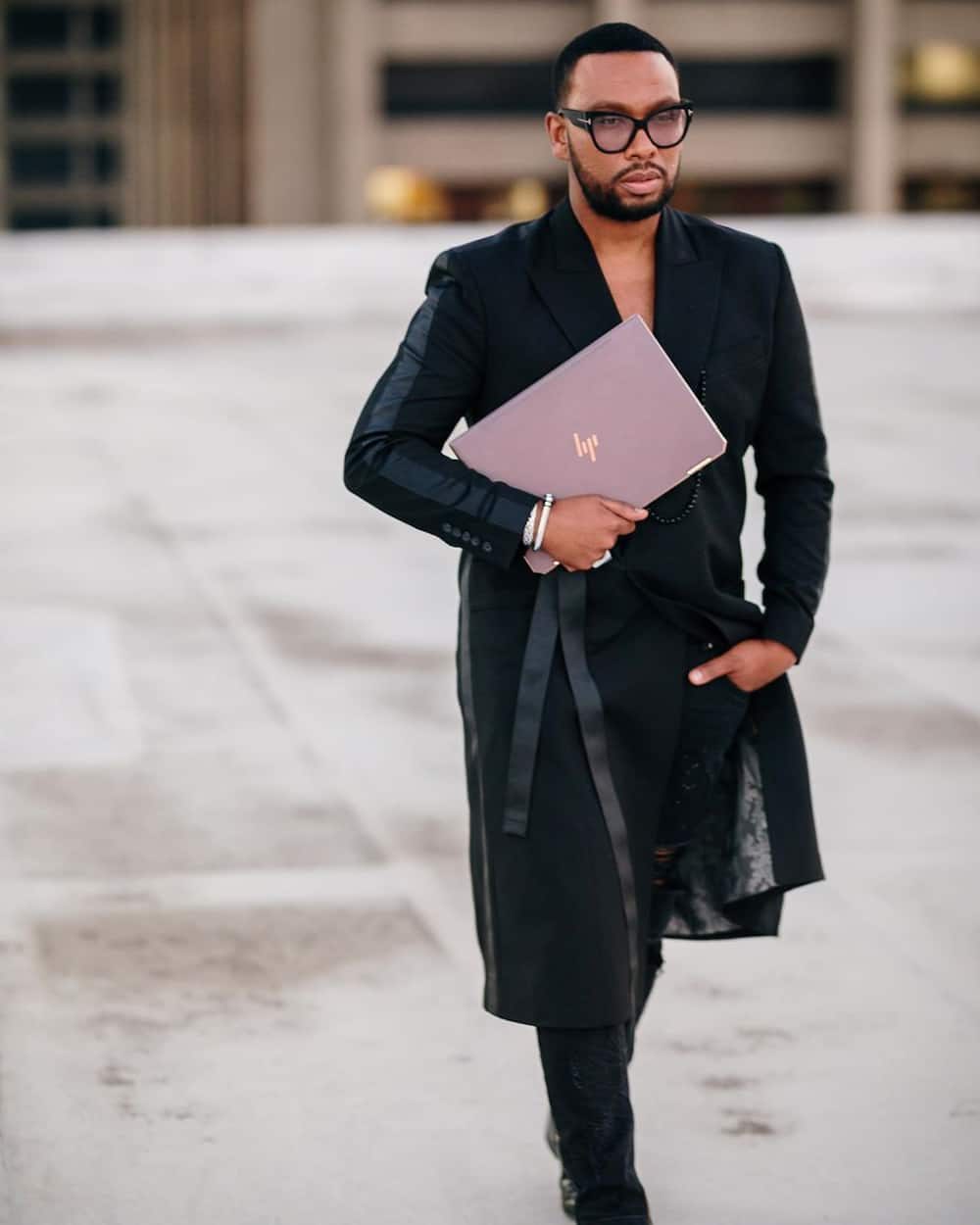
A homecoming that was not only about one designer
When David Tlale returned to the South African Fashion Week orbit this October, the interesting story was not simply that a familiar name was back. His opening presentation connected an established fashion house to a group of younger designers whose work is still finding its commercial footing. In an industry that is very good at celebrating a breakthrough moment, the harder test is what happens after it.
The designer’s 20 October presentation in Johannesburg included work from his Intern by David Tlale initiative. Contemporary reporting described architectural tailoring, exaggerated shoulders, layered winter looks and the theatrical silhouettes associated with his label. But the shared platform, rather than any single look, was the central editorial development: an experienced designer used a high-profile return to place emerging names in front of the same audience.
The distance between talent and an actual order
South African Fashion Week has long argued that a designer-led industry needs education, production capacity and repeat customers, not only memorable shows. Its New Talent Search dates to 1998, while its student competition began in 2019. This season’s student brief asks entrants to reinterpret a white cotton shirt, a useful test of construction and technique rather than pure styling.
That distinction matters. A collection can photograph beautifully and still be difficult to manufacture consistently, price sustainably or deliver on time. Tlale’s own reflections, reported after the presentation, put profitability and reproducibility alongside creativity. It is a less glamorous vocabulary than couture, but one that determines whether young labels survive beyond a launch.
Five designers, one bigger question
SAFW’s advance material identifies the young designers associated with the mentorship platform as ZOUR, Martin John Steenkamp, Blackfaces Apparel, Nwana/Ntwana and Michael Peter Reid; the spelling of one label varies between published event materials. The important point is that they are not being presented as anonymous supporting talent. Their names are part of the story.
The opportunity is meaningful without guaranteeing a commercial outcome. A runway appearance can produce visibility, contacts and useful feedback. It does not automatically produce wholesale orders, a reliable supply chain or the cash flow required to fulfil them. Those distinctions are why mentorship programmes should ultimately be judged by the businesses they help sustain.
The next measure of success
Tlale’s return also coincides with an AW27 season in which established labels and new entrants share a programme shaped by craft, tailoring and local production. For audiences, the clothes remain the attraction. For designers, the less visible infrastructure around them may be the bigger story.
The most useful question to ask after the applause is not who had the strongest finale. It is which emerging designers will have the support to make their next collection, employ a team and reach paying customers. That is how a homecoming becomes an inheritance rather than a one-night celebration.
Sources and verification
South African Fashion Week, 15 October 2026: David Tlale and designer development: Read source ↗
The National, 21 October 2026: coverage of Tlale’s AW27 return: Read source ↗
The Citizen, 21 October 2026: Johannesburg City Library runway report: Read source ↗
South African Fashion Week, 29 September 2026: official AW27 programme: Read source ↗

